جاري تجهيز المحتوى...
جاري تجهيز تفاصيل الفيلم...
A woman recalls her childhood growing up in the North of Spain, focusing on her relationship with her father.
هذه الصفحة متاحة حالياً كصفحة كتالوج. قد تتم إضافة خيارات مشاهدة قانونية لاحقاً.
Provider information is shown for reference. Playback is not available on AnubiPlay.
Powered by
Omero Antonutti
Agustín Arenas
Sonsoles Aranguren
Estrella - 8 años
Icíar Bollaín
Estrella - 15 años
Lola Cardona
Julia
Rafaela Aparicio
Milagros
Aurore Clément
badelf
March 31, 2025
In Victor Erice's luminous "El Sur," the deeply personal becomes profoundly political. This exquisite memory film operates on multiple interlinked planes -- a daughter's coming-of-age, a family fractured by ideology, and a nation emerging from the shadow of authoritarianism. The film's narrative elegance lies in how Estrella's gradual understanding of her father Agustin mirrors Spain's own painful self-examination after Franco. Just as Estrella discovers her father's complex past -- his estrangement from his own father over political differences, his abandoned love in the South -- Spain itself was confronting its buried histories and unresolved divisions in the early 1980s. The Republicans versus Fascists split that drove Agustin from his southern home becomes both literal family drama and national allegory. Erice's visual language is nothing short of transcendent. Jose Luis Alcaine's cinematography transforms ordinary spaces into chambers of memory, where light and shadow perform an intricate dance of revelation and concealment. The film's composition -- often framing characters through doorways, windows, or mirrors -- visually reinforces the theme of divided identities and partial understanding. What makes "El Sur" particularly resonant is that it reflects both personal and collective guilt. Estrella's concluding question about whether she could have done more for her father echoes Spain's own post-Franco reckoning with complicity and silence. If the novella by Adelaida Garcia Morales was indeed a personal reconciliation with her past, Erice expands it into a meditation on national conscience. The famous "incompleteness" of the film -- those southern sequences never filmed due to budget constraints -- becomes its most perfect metaphor. The South remains an abstraction, an idealized elsewhere that exists primarily in imagination and memory. This mirrors both Estrella's incomplete understanding of her father and Spain's unfinished process of reconciliation with its past. "El Sur" suggests that coming-of-age is never merely personal; it happens in historical context (similar themes emerge in "Pan's Labyrinth," "Au Revoir Les Enfants," and "Persepolis"). As Estrella moves from childhood to adolescence, discovering the complexities of adult relationships, Spain itself was navigating its own awkward transition from dictatorship to democracy. Both journeys involve confronting uncomfortable truths, abandoned possibilities, and the realization that some wounds may never fully heal. In its delicate balance of the intimate and the historical, "El Sur" becomes more than a film -- it's a memory palace where personal and national reckonings converge in moments of haunting beauty.
Goal II: Living the Dream
2007
Won't Back Down
2012
Irene Ríos / Laura
Maria Caro
Casilda
Francisco Merino
Enamorado
José Vivó
Camarero
Germaine Montero
Doña Rosario
José García Morilla
Chófer
María Massip
Estrella adulta (voice)
José Luis Fernández 'Pirri'
Carioco (voice) (uncredited)
Jesús Nieto
Agustín Arenas (voice) (uncredited)
Tigertail
2020
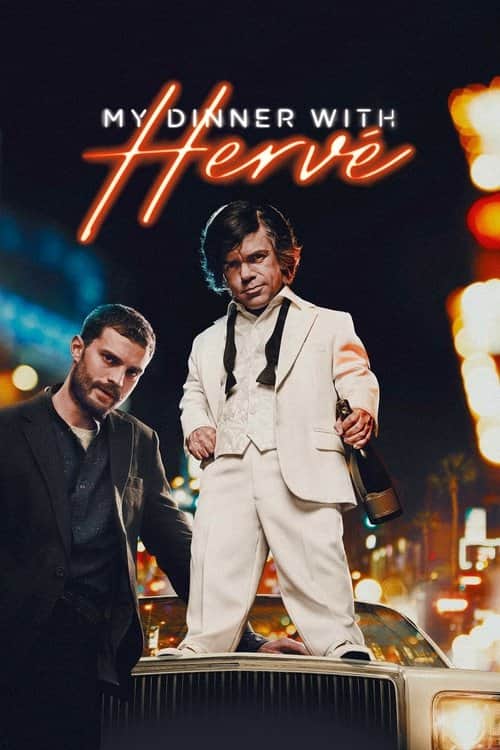
My Dinner with Hervé
2018
Flicka
2006
Bobby Jones: Stroke of Genius
2004
What Maisie Knew
2013
Home Run
The Fugitive
1947
The Red Virgin
2024
Sky
2016
Madrid, 1987
Blue Chips
1994
Parked
2010
The Pumpkin Eater
1964
Sundays
2025
Good Day, Ramon
Fast Girls
The Girl in the Book
2015
A Call to Spy